Exterior Paint Sheens Explained for Siding, Trim, and Doors
Choosing an exterior paint color gets most of the attention, but sheen can have just as much impact on how your home looks and how well the finish holds up. The wrong sheen may highlight every flaw, collect dirt, or make architectural details disappear.
A well-planned exterior uses different finishes for siding, trim, doors, and other surfaces. Understanding where flat, satin, semi-gloss, and gloss finishes work best can help you get a cleaner appearance, easier maintenance, and longer-lasting results.
Why Exterior Paint Sheen Matters
Paint sheen describes how much light reflects from a painted surface. Flat finishes reflect very little light, while gloss finishes create a noticeably brighter shine.
That difference is not purely cosmetic. Sheen affects several practical characteristics, including:
How easily dirt can be washed away
How visible surface imperfections appear
How well the coating handles moisture
How much architectural detail stands out
How frequently a painted area may need maintenance
Exterior walls face rain, sunlight, dust, temperature changes, and everyday wear. Areas such as doors and trim receive even more contact. That is why using one finish across every exterior surface is rarely the best approach.
Homeowners comparing Portland OR residential painting services should ask how the contractor selects paint finishes for each surface rather than focusing on color alone. An experienced painter should consider the material, condition, exposure, and function of every area before recommending a sheen.
What Sheen Is Best for Exterior Siding?
For most siding, a low-luster finish offers the best balance between appearance and durability.
Flat or Matte
Flat paint has little to no noticeable shine. It can be useful on older siding because it helps hide small dents, uneven texture, patched areas, and other imperfections.
Its soft appearance can also complement traditional homes where a highly reflective finish would look out of place.
The tradeoff is maintenance. Flat surfaces tend to hold dirt more easily and may be more difficult to clean without affecting the finish.
Flat paint may work well for:
Older wood siding with visible imperfections
Stucco and masonry
Low-contact exterior walls
Homes where a muted appearance is preferred
Satin or Low-Luster
Satin is one of the most practical choices for exterior siding. It has enough sheen to make washing easier without producing an overly glossy appearance.
It also tends to handle moisture and changing weather better than many flat finishes.
Satin works particularly well on:
Fiber cement siding
Wood siding in good condition
Engineered siding
Smooth masonry surfaces
Because satin reflects more light, preparation becomes important. Scraping, sanding, repairing cracks, and properly priming the surface can make the finished result look far more consistent.
Professional exterior painting services should include this kind of surface evaluation before paint is applied. Sheen cannot compensate for loose paint, damaged siding, or poor preparation underneath.
What Sheen Should You Use for Exterior Trim?
Trim is designed to frame a home and give its exterior definition. Window casings, fascia boards, corner boards, columns, and decorative elements usually benefit from slightly more sheen than the siding.
Semi-gloss is a common choice because it creates enough contrast to make trim stand out while providing a tougher, easier-to-clean surface.
Compared with siding, trim often experiences more exposure to water runoff and physical contact. A more durable finish can therefore be useful around:
Windows
Door frames
Fascia
Porch railings
Columns
Decorative moldings
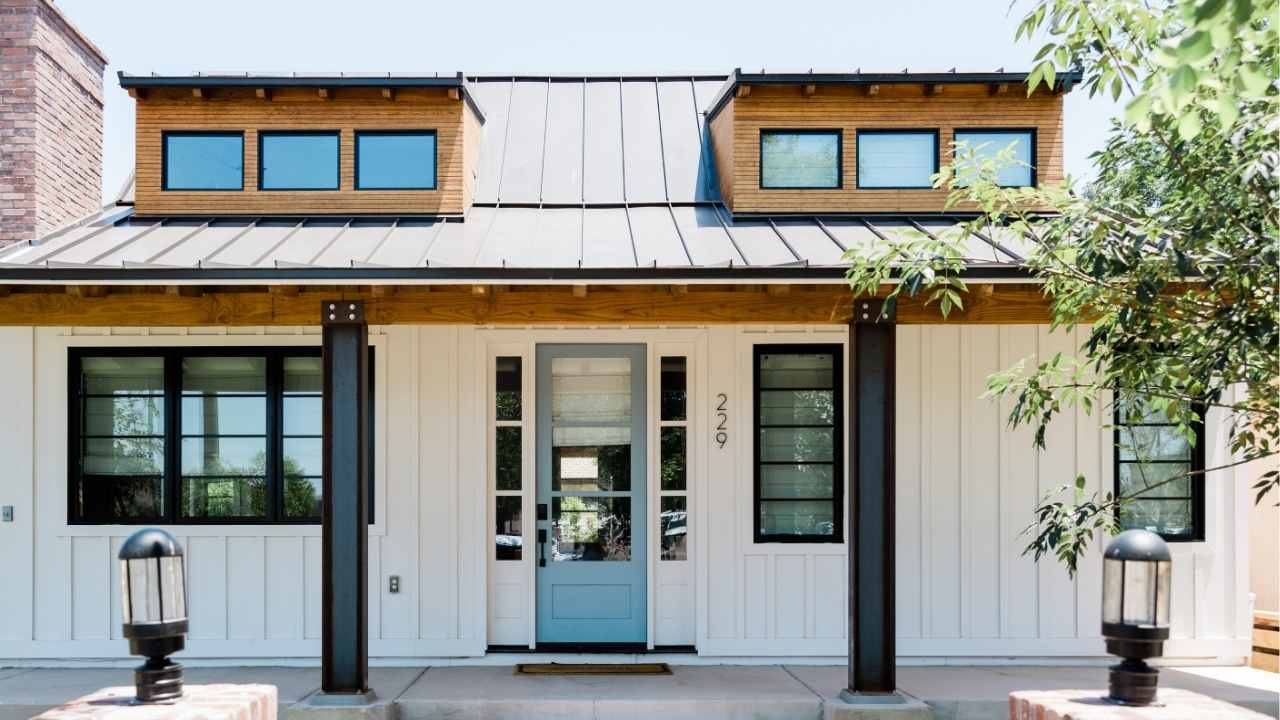
Using satin siding with semi-gloss trim creates a subtle contrast even when both surfaces are painted the same color.
However, higher sheen exposes flaws. Brush marks, rough wood grain, old paint edges, nail holes, and uneven repairs become easier to see when light reflects from the surface.
Good preparation matters even more here.
A trusted painting company will typically inspect trim for rot, failed caulking, peeling paint, moisture damage, and loose material before applying the final coat. Painting over these problems may produce a fresh appearance temporarily, but the finish is unlikely to remain attractive for long.
What Is the Best Sheen for Exterior Doors?
The front door is often the most visually prominent painted surface on a home. It is also one of the most frequently touched.
For those reasons, semi-gloss is usually an excellent choice.
Semi-gloss provides a smooth, noticeable finish while making fingerprints, dust, and grime easier to wipe away. It also creates enough contrast to help an entry door become a focal point.
Full gloss can create an even stronger effect, particularly on formal homes or doors with detailed architectural features. However, glossy finishes require extremely careful preparation because they reveal nearly every dent, brush mark, crack, or uneven patch.
Before painting an exterior door, proper preparation may include:
Cleaning oils and dirt from the surface
Sanding rough areas
Filling dents or damaged sections
Removing loose coatings
Applying the correct primer
Allowing enough drying time between coats
Garage doors are slightly different. Because they cover a large surface area, excessive gloss can sometimes create distracting reflections. Satin or low-luster finishes are often better choices unless a more polished appearance is intentionally part of the design.
Matching Sheen Across the Entire Exterior
The goal is not to choose the highest-quality sheen independently for every surface. The goal is to create a coordinated finish across the whole property.
A common combination is:
Flat or satin for siding
Satin or semi-gloss for trim
Semi-gloss for doors
Satin for garage doors
Semi-gloss for frequently touched railings and architectural details
Climate also matters. Homes exposed to frequent rain or moisture may benefit from finishes that resist water and clean easily. Homes with older siding may need lower-sheen products that minimize visual imperfections.
Color changes how sheen appears as well. Darker colors can make reflective finishes seem more dramatic, while very light colors often make the difference less noticeable.
Whenever possible, test the actual paint on the exterior rather than making a final decision from a small sample card. Look at it during morning light, afternoon sun, and overcast conditions before committing.
Short Case Study: Small Sheen Changes, Cleaner Results
A homeowner preparing to repaint an older house initially planned to use semi-gloss paint on nearly every exterior surface because it seemed easier to clean. Once test sections were applied, however, the higher sheen made minor siding repairs and uneven wood grain much more obvious.
The final plan used a low-luster finish on the siding, semi-gloss on the trim, and semi-gloss on the front door. The siding appeared smoother, the trim created clearer architectural definition, and the entry gained enough shine to stand out without overwhelming the facade. No major color changes were needed. Simply assigning the right sheen to each surface produced a more polished exterior.
Choose Sheen Based on the Surface, Not Just the Sample
Exterior paint sheen affects far more than shine. It influences durability, cleaning, moisture resistance, surface appearance, and how different architectural features work together.
For most homes, lower-luster finishes perform well on large siding areas, while stronger sheens are better suited to trim and frequently touched doors. The exact combination should still depend on the condition of the surfaces, the home’s architecture, and local weather exposure.
Before your next exterior repaint, have each surface inspected and choose finishes based on how the home actually needs to perform. Contact a professional residential painter to discuss the right combination of preparation, paint products, colors, and sheens for your property.